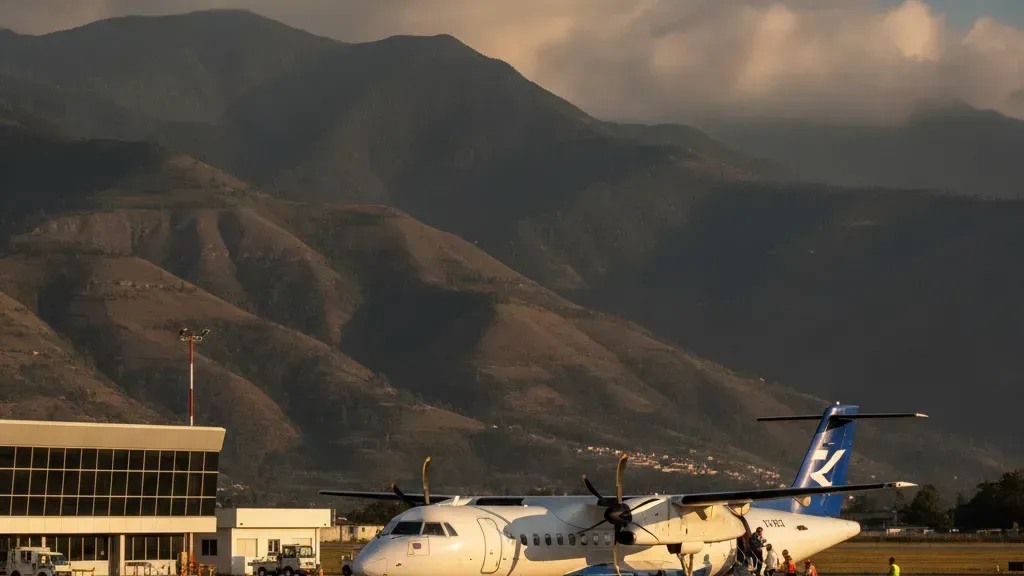
Cuenca airport: agreements are not a flight schedule

Planning a trip from Cuenca to another country? An agreement to prepare Mariscal La Mar airport for international service does not, by itself, give you a bookable nonstop route. Check the airport’s current flight information and the operating airline before making travel plans.
The agreements predate the old headline
The Municipality of Cuenca reported on November 13, 2023 that the airport corporation, city and national agencies had signed specific cooperation agreements related to internationalization, airport security and control services. Its notice says a broader agreement had been signed on September 14. The old version of this article, published in March 2026, treated those arrangements as a fresh 2026 milestone. That chronology was wrong.
The 2023 municipal notice described planned terminal adaptations and responsibilities for migration and anti-narcotics services. It also said the city hoped to seek airlines and new destinations. Those statements establish what the parties intended at the time; they do not announce a specific international airline, route, start date or ticket sale.
“International” in an airport name is not a ticket
CORPAC’s current website calls Mariscal La Mar an international airport and provides links for airlines and itineraries. A label on an airport website and an agreement among agencies answer different questions from “Can I buy a direct flight to my destination on my travel date?” For that, use CORPAC’s itineraries and flights page, then confirm the exact route, schedule, connection and ticket terms on the airline’s own site. Airport schedules and available seats can change.
Separate a project update from a journey
If a new international route is announced, check who operates it, when service begins, whether it is seasonal, and whether your itinerary requires a connection. Do not book lodging or an onward flight based only on a proposed route or on this archived article’s mention of unnamed airline talks. The old article’s assertions about four interested airlines, runway limitations and imminent direct flights were not verified from the official records used for this correction and are withdrawn here.
Sources
- Municipality of Cuenca, November 13, 2023 agreements notice
- CORPAC, official airport website
- CORPAC, itineraries and flights
Daily publishing is paused while our archive is reviewed. Questions or corrections? Contact Chip.
Keep Cuenca's daily expat briefing independent.
Reader support helps pay for reporting, translation, editing, hosting, and the daily work behind CuencaExpat.
More in News
View all →Gapal Interchange Project Faces Claims Amidst Bidding Process in Cuenca
September 21, 2026
Azuay Prosecutors Request Hearing for Suspended Cuenca Mayor Cristian Zamora Amid Health Travel Announcement
September 21, 2026
Azuay Authorities Coordinate Provincial Simulation to Prepare for El Niño Scenarios
September 19, 2026