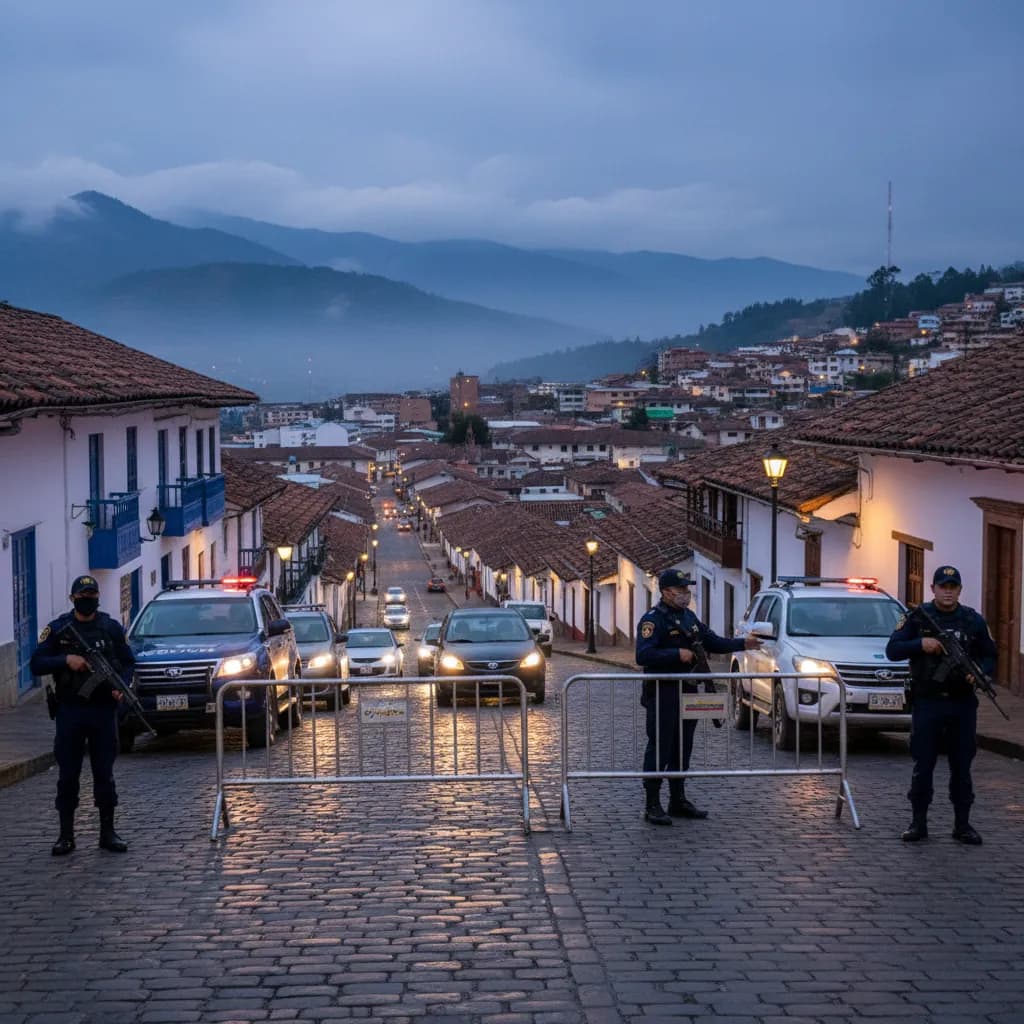
Extortion Ring Busted in Cuenca — Six Suspects Arrested in Ricaurte


What Happened
National Police announced the arrest of six suspects in Cuenca in connection with an alleged extortion operation on April 17, 2026 (source). All individuals referenced here are suspects; none has been convicted, and all are presumed innocent until found guilty in court.
The operation took place in Ricaurte, the parish on the northern edge of Cuenca, in a coordinated raid by the Unidad Nacional Antisecuestros y Extorsión (UNASE), the Dirección General de Investigación (DGI), and the Grupo de Operaciones Especiales (GOE).
Per El Mercurio, the immediate trigger was a report from a single victim: "detuvieron en Cuenca a seis sospechosos de extorsionar a un ciudadano, a quien le exigieron dinero a cambio de no atentar contra su vida ni la de su familia" — six suspects were detained after a citizen reported being asked for money under threat to his life and his family's.
What Was Found
Police recovered:
- Cash (amount not disclosed)
- 7 cell phones
- Documentation with records of multiple victims
The last one is the important detail. Per the article: "esta banda de extranjeros operaba en Cuenca y en varios cantones de Azuay, donde extorsionaba a familias y propietarios de establecimientos comerciales" — this group was operating across Cuenca and other Azuay cantons, targeting families and small business owners.
In other words, the arrested ring was hitting more than one victim at a time, and the documentation suggests this was an organized operation rather than a one-off scam.
The Legal Side
Under Article 185 of the COIP (Código Orgánico Integral Penal), basic extortion carries 3 to 5 years. Aggravating factors push it higher:
- Victim is a minor, elderly, pregnant, disabled, or seriously ill: 5 to 7 years
- Threat involves death, kidnapping, or serious harm: 5 to 7 years
- Perpetrator has a personal, work, or commercial relationship with the victim: 5 to 7 years
What to Do If You're Targeted
The Policía Nacional published the following recommendations along with the arrest announcement:
- Stay calm. Don't respond with threats of your own.
- Don't share personal, family, or financial details. That's the information the next call will use against you.
- Don't pay. Per police: paying doesn't buy safety, and often invites larger demands.
- Save the evidence. Messages, audio, phone numbers, photos of any pamphlets — all of it can be used by investigators.
- Report immediately. Two channels:
- 1800 DELITO (extortion-specific tip line)
- ECU 911 (general emergency)
What This Means for You
Expats are a known target for extortion calls in Ecuador — especially anyone visibly running a small business, owning property, or appearing to be on the wealthier end of the local income spectrum. A few specific notes:
- Phone-based extortion is common, and most of it is bluffing. Calls claiming "we know where your kids go to school" are usually fishing for any reaction that confirms identity. Hanging up is almost always the right move.
- Don't engage "to find out what they know." Every word you give them helps the next call.
- If you own a storefront or visible business in Cuenca, vary your routines — bank deposits, opening times, who closes up. Predictability is what extortion rings exploit.
- Report even "silly" attempts. Police can connect patterns across calls. The arrest reported here was built from victim documentation.
- 1800 DELITO is the right number to save in your phone. ECU 911 is fine for active emergencies; 1800 DELITO is for extortion specifically.
Good result for UNASE this week. Worth knowing the playbook in case you ever need it.
Source: El Mercurio
Keep Cuenca's daily expat briefing independent.
Reader support helps pay for reporting, translation, editing, hosting, and the daily work behind CuencaExpat.
More in News
View all →Cuenca Residents Face Rising Market Prices, Azuay Governor Warns Against Speculation
October 15, 2026
Gapal Interchange Project Faces Claims Amidst Bidding Process in Cuenca
September 21, 2026
Azuay Prosecutors Request Hearing for Suspended Cuenca Mayor Cristian Zamora Amid Health Travel Announcement
September 21, 2026