Ecuador's International Reserves Hit All-Time Record — What It Means for Your Dollars

The Number That Matters Most
Here's a figure every expat living in Ecuador should know: $11.94 billion.
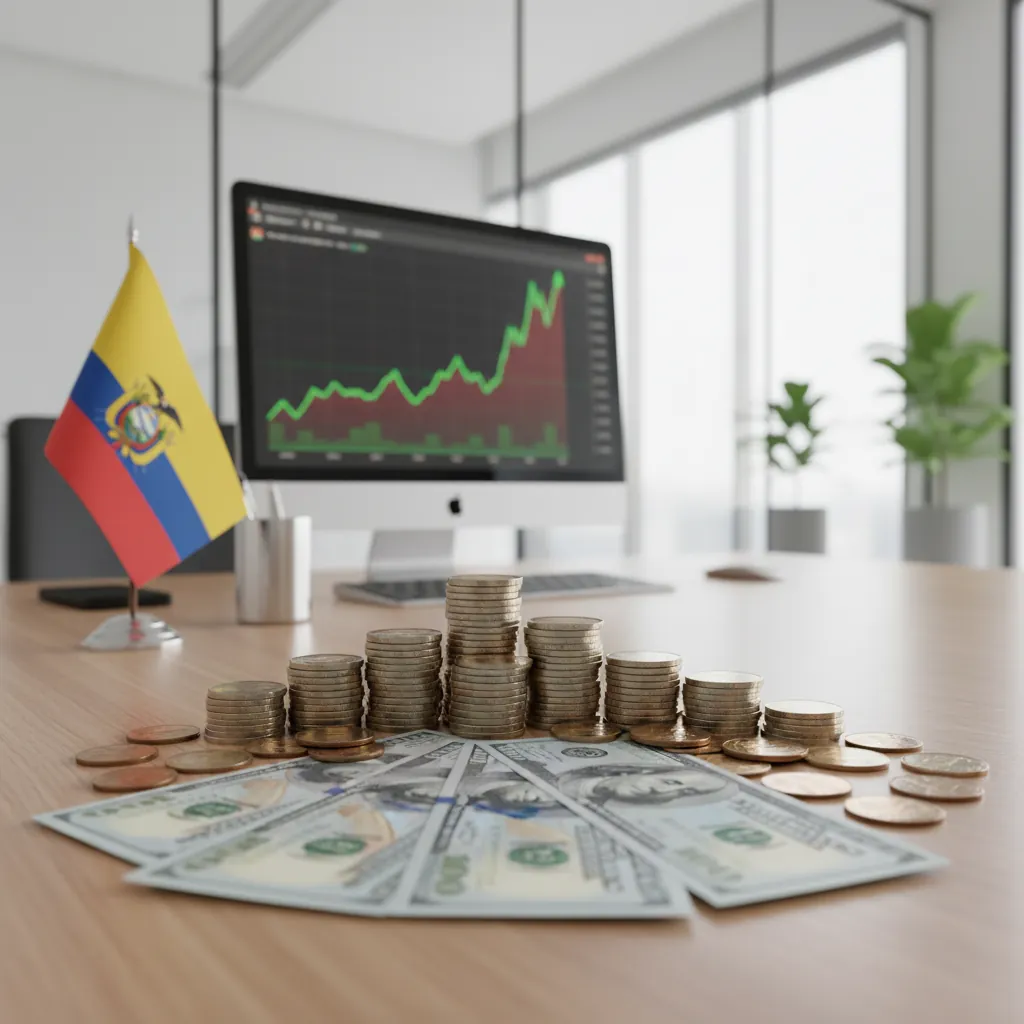
That's the level Ecuador's international reserves reached as of March 13, 2026, according to the Central Bank of Ecuador. It's the highest level in the country's history — and specifically, the highest since Ecuador adopted the US dollar as its official currency back in January 2000.
To put that growth in perspective:
- December 2023: $4.45 billion
- December 2024: $9.795 billion
- February 2026: $11.858 billion
- March 13, 2026: $11.94 billion
That's a $7.4 billion increase in just over two years. The reserves are now 42% higher than they were at the end of 2024.
Why Should You Care?
If you're new to Ecuador or new to the concept of dollarization, here's the short version: Ecuador doesn't have its own currency. It uses the US dollar for everything — your rent, your groceries, your bank account, your salary if you work here.
But here's the thing — Ecuador can't print dollars. Only the US Federal Reserve can do that. So Ecuador needs to earn its dollars through exports, investment, remittances, and loans. The international reserves are essentially the country's dollar stockpile — the pool of foreign currency and assets (including gold) held by the Central Bank.
Think of it this way: in a dollarized economy, international reserves are the safety net for your bank account. They back the dollars circulating in the system. If reserves get dangerously low, the country could face a liquidity crisis — not enough dollars to go around, banks restricting withdrawals, economic chaos. That's the nightmare scenario, and it's happened before (2015-2016 was particularly rough).
So when reserves hit an all-time high? That's the opposite of the nightmare scenario. Your dollars in Ecuador are backed by the strongest reserves in the country's history.
What's Driving the Growth
Several factors are contributing to this reserve buildup, according to analysts cited by El Universo and Primicias:
- Fiscal discipline — the government has been keeping spending in check and maintaining primary surpluses
- Strong export performance — oil, shrimp, bananas, and other exports have been bringing in steady dollar flows
- Foreign investment inflows — international confidence in Ecuador's economy has been growing
- IMF backing — Ecuador's relationship with the International Monetary Fund has provided both direct funding and a signal to markets that the country is on the right track
- Gold prices — Ecuador holds gold in its reserves, and gold has been on a significant uptrend globally
The Credit Rating Upgrade
Here's another data point that ties into this story: in January 2026, Moody's upgraded Ecuador's credit rating to Caa1, according to Bloomberg. That was the first upgrade in six years — a significant vote of confidence from one of the world's major credit rating agencies.
A better credit rating means Ecuador can borrow more cheaply on international markets, which in turn supports the reserve position. It also signals to foreign investors that Ecuador is becoming a safer bet.
Additionally, Ecuador's country risk index (riesgo país) — a measure of how risky international markets consider lending to the country — has fallen to around 413-464 points, according to El Universo. For context, this was above 1,500 points just a few years ago. Lower is better.
What This Means Practically
Let's bring this down to earth for daily life in Cuenca:
- Your bank deposits are safer than they've ever been. The reserves backing the financial system are at record levels. This doesn't mean Ecuadorian banks are risk-free (no bank anywhere is), but the systemic risk from a dollar shortage is at its lowest point in the dollarization era
- The economy is more stable. Strong reserves mean the government has more room to manage economic shocks — whether that's a drop in oil prices, a natural disaster, or a global recession
- Ecuador is becoming a more attractive destination for investment. If you're considering buying property, starting a business, or making any long-term financial commitment in Ecuador, the macro fundamentals are moving in the right direction
- Inflation remains controlled. Because Ecuador uses the dollar, it essentially imports US monetary policy. Combined with strong reserves, this means the kind of hyperinflation that plagues some neighboring countries isn't really a risk here
The Bottom Line
Ecuador's economy has had a rough decade — debt crises, a pandemic, security challenges, political instability. But the financial fundamentals right now are genuinely strong. Record reserves, improving credit ratings, falling country risk.
None of this means Ecuador is Switzerland. There are still real challenges — security being the most obvious one. But if your concern is "are my dollars safe in Ecuador?" the answer has never been more reassuring than it is right now.
Sources: El Universo, Primicias, Bloomberg
Keep Cuenca's daily expat briefing independent.
Reader support helps pay for reporting, translation, editing, hosting, and the daily work behind CuencaExpat.
More in News
View all →Gapal Interchange Project Faces Claims Amidst Bidding Process in Cuenca
September 21, 2026
Azuay Prosecutors Request Hearing for Suspended Cuenca Mayor Cristian Zamora Amid Health Travel Announcement
September 21, 2026
Azuay Authorities Coordinate Provincial Simulation to Prepare for El Niño Scenarios
September 19, 2026