Historic Center Building Collapses on Rafael Maria Arizaga

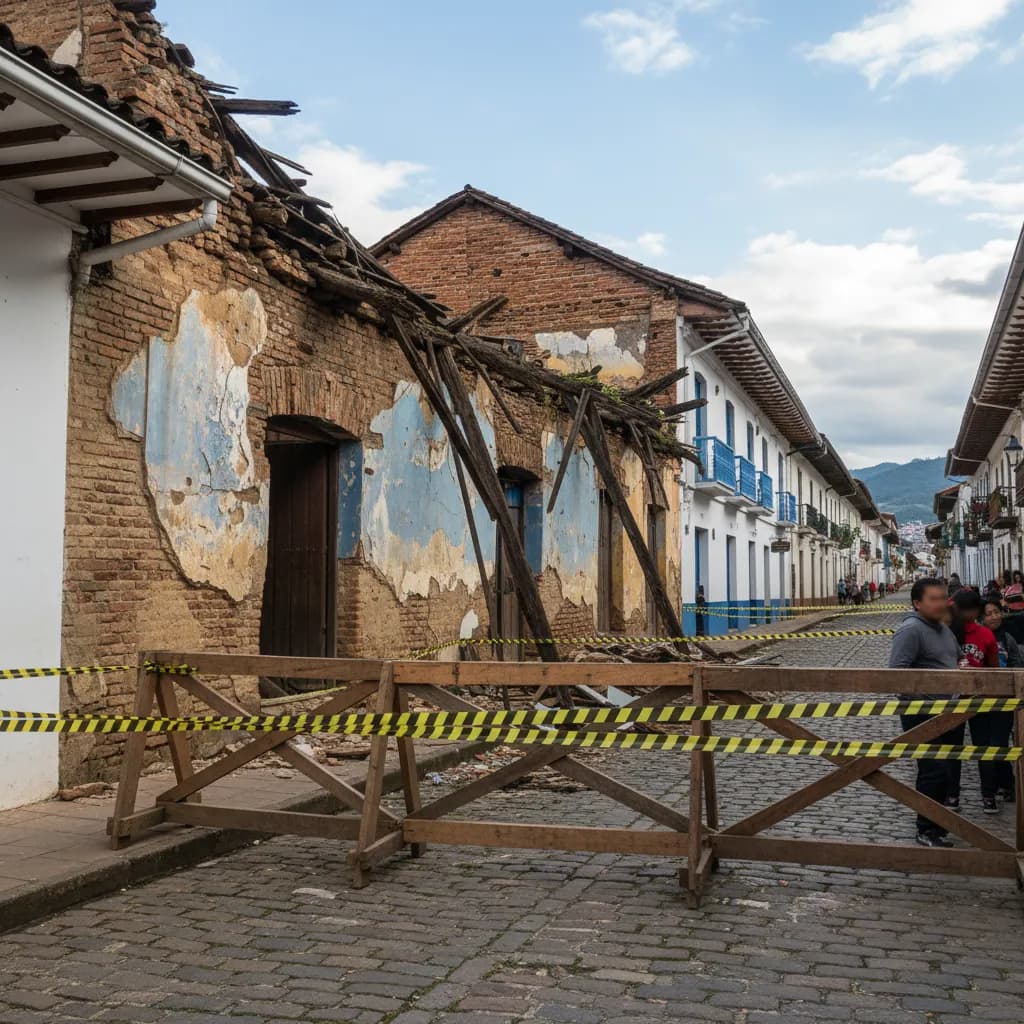
Heritage Building Collapses in Centro Historico
A roughly 150-year-old building in Cuenca's historic center has collapsed. The vacant heritage structure, located at the intersection of Rafael Maria Arizaga and Hermano Miguel, gave way due to advanced structural decay -- not an earthquake, not an external impact, but years of neglect finally catching up.
The building had been vacant for some time, and neighbors had previously blocked access to the property to prevent squatters from moving in, which suggests the deterioration was visible and concerning well before the collapse actually happened.
What Happened
The collapse appears to have been caused entirely by internal structural failure. The building's load-bearing elements -- walls, beams, and roofing -- had deteriorated to the point where they could no longer support the structure's own weight. There are no reports of injuries, likely because the building was vacant and neighbors had been keeping people out.
Following the collapse, both the Municipal Directorate of Historic and Patrimonial Areas (Areas Historicas y Patrimoniales) and the Directorate of Risk Management (Direccion de Gestion de Riesgos) inspected the site. Their assessment confirmed that the collapse was due to advanced structural decay rather than any external event.
Legal Consequences
This is where it gets serious for the building's owner. Under Ecuadorian law, owners of patrimony buildings -- structures designated as part of the city's cultural heritage -- have a legal obligation to maintain them. Failing to do so isn't just negligent; it's a crime.
The owner of the collapsed building faces 1 to 3 years of imprisonment for failing to maintain a heritage property. This is a provision that exists specifically to prevent exactly this kind of outcome -- owners letting historic buildings deteriorate until they collapse, effectively destroying irreplaceable cultural heritage through inaction.
The Bigger Problem
This collapse isn't an isolated incident. Cuenca's historic center contains hundreds of heritage buildings, many of which are privately owned. While some owners maintain their properties meticulously, others -- particularly those who own buildings they don't occupy -- allow them to deteriorate.
The reasons vary:
- Cost: Restoring and maintaining a heritage building is expensive. The materials must be period-appropriate, the techniques specialized, and the oversight rigorous. Not every owner has the financial resources or the willingness to invest
- Regulation: Heritage buildings face restrictions on modifications, which can make them less commercially attractive. An owner who can't modernize a building may see less incentive to maintain it
- Absentee ownership: Some heritage buildings are owned by people who don't live in Cuenca or don't live in the building. Out-of-sight, out-of-mind neglect is a real phenomenon
- Inheritance disputes: Some properties are tied up in family disputes over ownership, leaving no one clearly responsible for maintenance
Municipal authorities have acknowledged that other historic properties are also at risk. The collapse on Rafael Maria Arizaga is a wake-up call, but it's unclear whether it will trigger the kind of systematic inspection and enforcement that would prevent the next one.
Why This Matters for Cuenca's UNESCO Status
Cuenca's historic center is a UNESCO World Heritage Site, designated in 1999. That designation isn't just honorary -- it comes with obligations. UNESCO expects the city to protect and maintain the buildings and urban fabric that earned the designation. If enough heritage buildings are lost to neglect and collapse, the integrity of the World Heritage Site is compromised.
Losing the UNESCO designation would be more than symbolic. It would affect Cuenca's international reputation, its tourism appeal, and its access to international preservation funding. Every building that collapses due to neglect chips away at the foundation of that designation.
What This Means for Expats
- If you live in or near a heritage building in the historic center, this is worth paying attention to. The structural condition of neighboring buildings can affect your safety. If you notice a building nearby that appears abandoned and deteriorating -- crumbling walls, sagging rooflines, missing roof tiles, visible cracks -- report it to the municipality
- If you're renting or buying in Centro Historico, ask about the structural condition of the building. Heritage buildings can be beautiful, but they require ongoing maintenance. A building that hasn't been properly maintained can have hidden structural issues
- The legal consequences are real. If you own or are considering purchasing a heritage building in Cuenca, understand that you have a legal obligation to maintain it. The 1-3 year imprisonment penalty for neglect is not theoretical -- this case may test that provision
- Report concerns through official channels. If you see a building that appears to be at risk of collapse, contact the Direccion de Areas Historicas y Patrimoniales through the GAD Municipal de Cuenca. In an emergency (active collapse, structural failure), call ECU 911
- This is a reminder of what makes Cuenca special -- and what's at stake. The historic center is a living museum of colonial and republican architecture. Preserving it requires active effort from owners, the municipality, and the community. Every building lost is irreplaceable
A 150-year-old building doesn't collapse overnight. It collapses after years of warning signs that went unheeded. The question now is whether this collapse will prompt the kind of action needed to prevent the next one.
Source: CuencaHighLife
Keep Cuenca's daily expat briefing independent.
Reader support helps pay for reporting, translation, editing, hosting, and the daily work behind CuencaExpat.