Pawkar Raymi Just Happened — Here's What the Andean New Year Looked Like in Cuenca

What Is Pawkar Raymi?
The Pawkar Raymi (also spelled Paucar Raymi) is one of the four major Andean celebrations tied to the agricultural and solar calendar. It marks the Festival of Flowering — the time when crops planted months earlier begin to bloom — and coincides with the spring equinox (March 20-21).
In the Kichwa cosmovision, this is essentially the Andean New Year: a moment of renewal, gratitude for the earth's fertility, and spiritual cleansing before the new cycle begins.
The four Andean raymis (festivals) throughout the year:
- Pawkar Raymi (March) — Festival of Flowering
- Inti Raymi (June) — Festival of the Sun (the most famous one)
- Kulla Raymi (September) — Festival of the Moon and Fertility
- Kapak Raymi (December) — Festival of Leadership
What Happened in Cuenca
Celebrations took place on March 20-21 at several locations around the city:
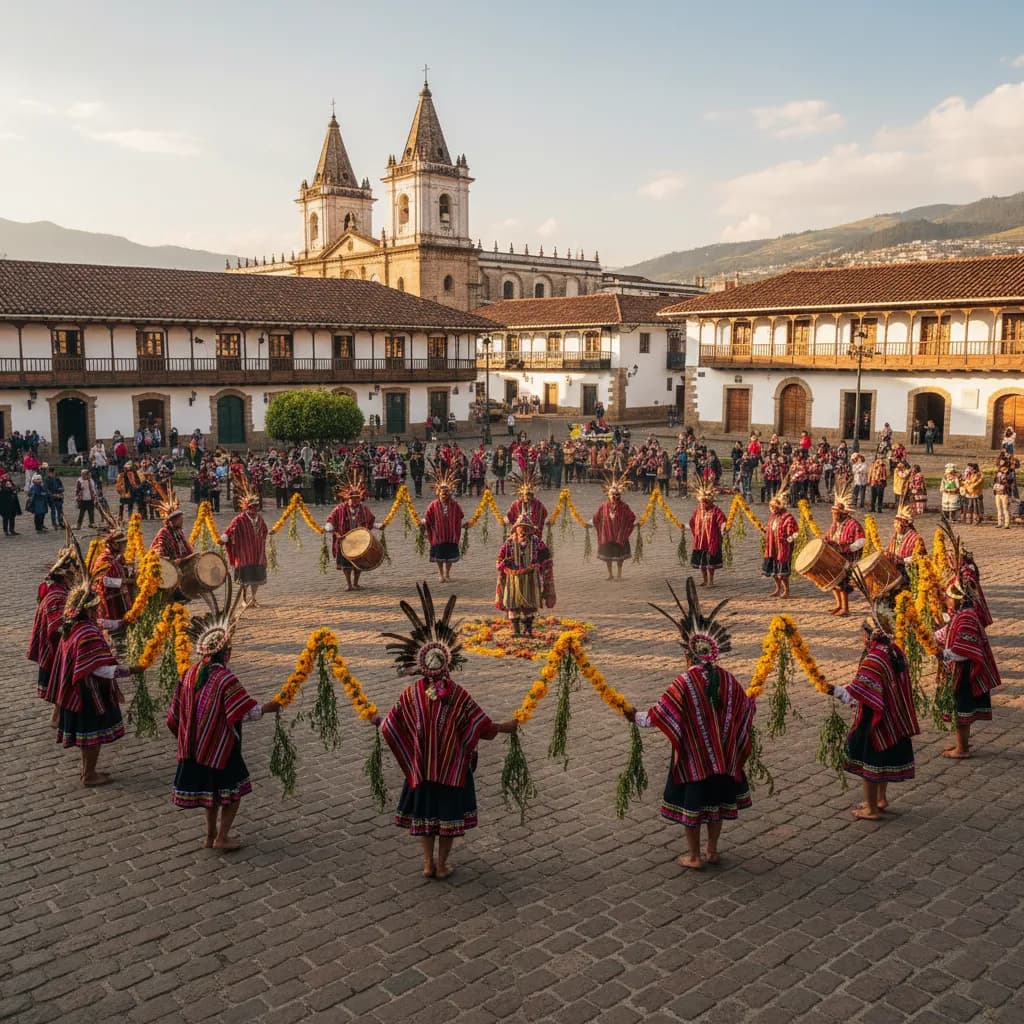
Plazoleta de El Vado
The charming plaza in the El Vado neighborhood — one of Cuenca's most traditional barrios — hosted a public ceremony with:
- Traditional music featuring Andean instruments (quena, zampoña, drums)
- Dance performances in traditional indigenous dress
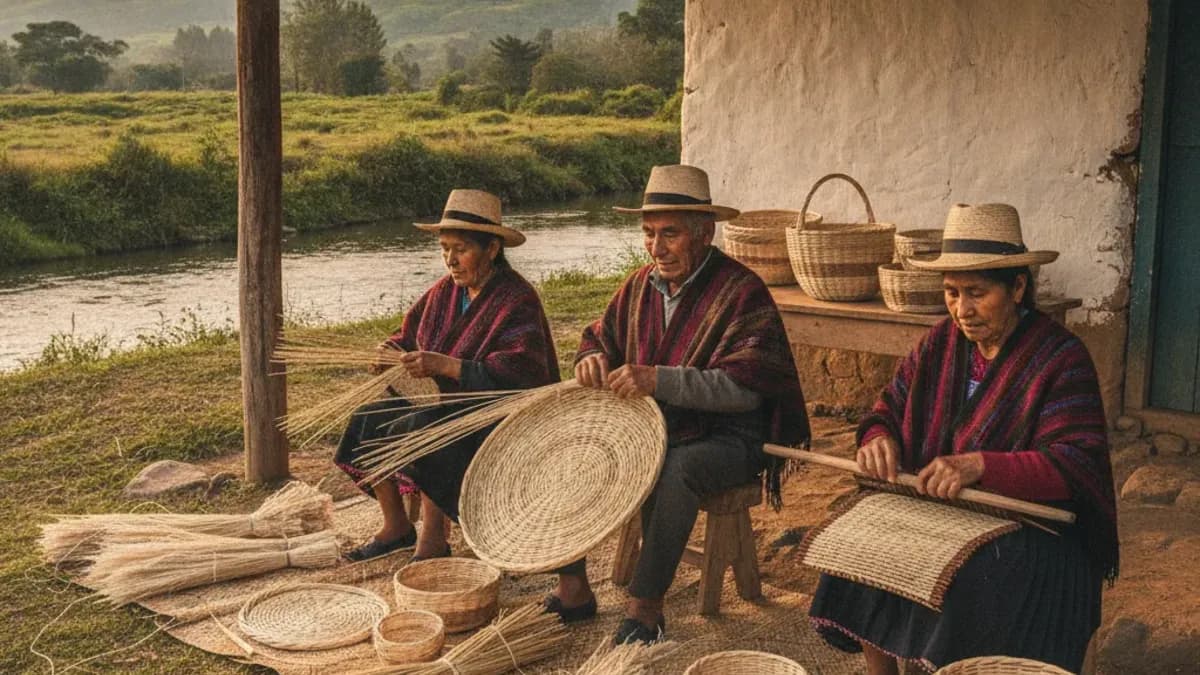
- Artisan vendors selling crafts, food, and ceremonial items
- Community gathering with participation from local indigenous organizations
Parque Ecológico de Ictocruz
This ecological park on the hills south of the city provided a more natural setting for the ceremony:
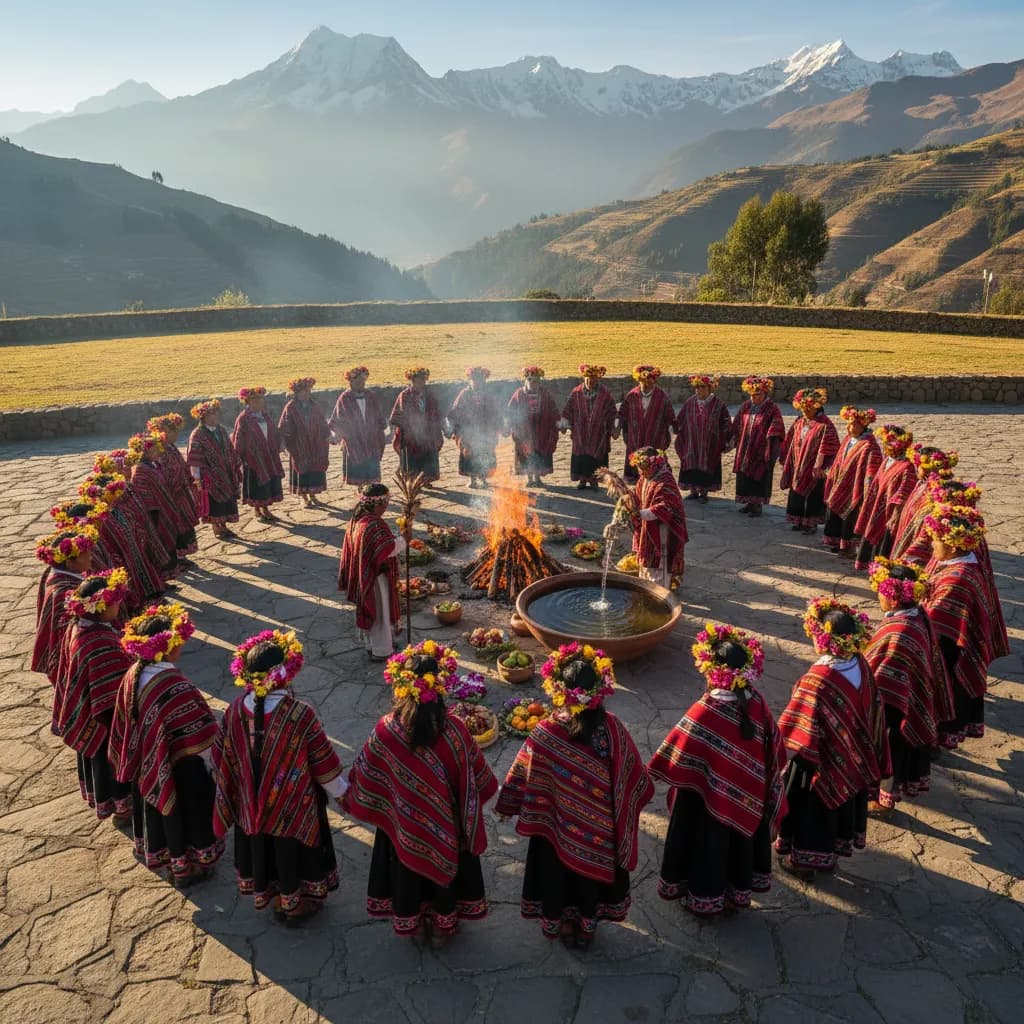
- New Fire ceremony (Musuk Nina) — a central ritual where a new fire is lit to symbolize the beginning of the new cycle. The old fire represents the past year; the new flame represents renewal
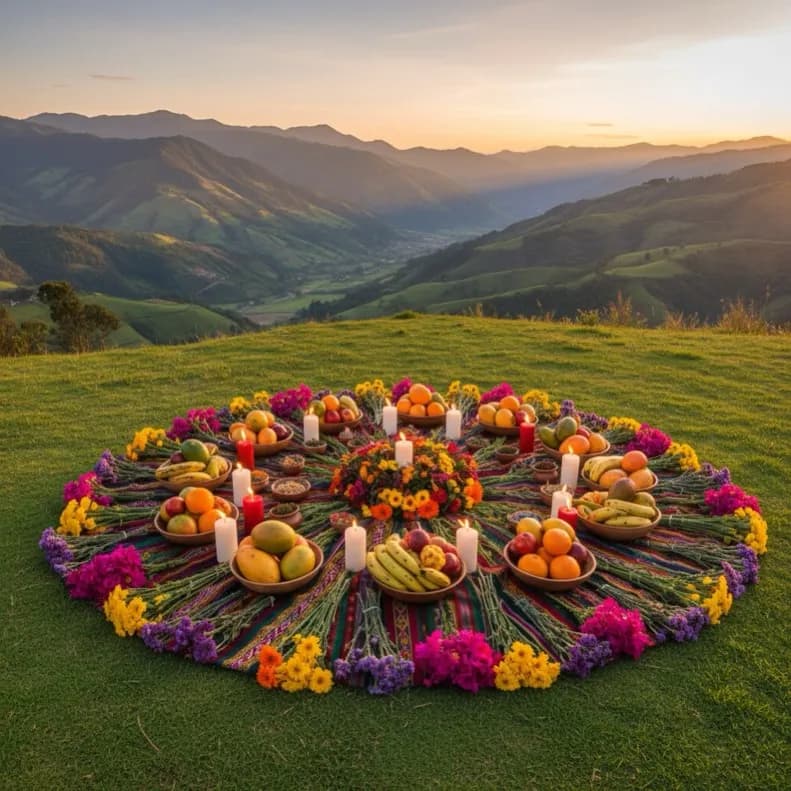
- Four elements ritual — offerings and prayers to water, earth, fire, and air, the fundamental elements in Andean cosmology
- Sunrise observation on the equinox morning
Botanical Garden (Jardín Botánico)
Cuenca's botanical garden, located along the Yanuncay River, hosted educational and ceremonial activities:
- Guided walks explaining the significance of native plants in Andean culture
- Seed exchanges — participants brought seeds to share, symbolizing community and abundance
- Floral offerings to Pachamama (Mother Earth)
The Cultural Significance
For Ecuador's indigenous communities — who make up roughly 7% of the national population and a significant presence in the Azuay and Cañar provinces surrounding Cuenca — the Pawkar Raymi is not a folk performance or tourist attraction. It's a living spiritual practice that has survived over 500 years of colonization, suppression, and marginalization.
The spring equinox connection is precise: on March 20, day and night are almost exactly equal in length. In Andean agricultural tradition, this moment signals that the rainy season is doing its work — crops are growing, flowers are blooming, and the earth is abundant.
Key concepts in the celebration:
- Pachamama (Mother Earth) — gratitude for the harvest to come
- Musuk Nina (New Fire) — spiritual renewal, letting go of the old, welcoming the new
- Tumarina — a ritual cleansing with flower-infused water, symbolizing purification
- Reciprocity — the Andean principle that we must give back to the earth what it gives us
Why This Matters in Cuenca
Cuenca sits in the heart of Cañari territory — the indigenous group that inhabited this region long before the Inca arrived (around 1470) and centuries before the Spanish founded the city (1557). The Cañari culture is still alive in the surrounding communities, and events like the Pawkar Raymi are part of an ongoing effort to keep these traditions visible and valued.
In recent years, the Cuenca municipal government has increasingly supported indigenous cultural events, providing public spaces and logistical support. It's a positive development — for decades, these celebrations were largely invisible in the urban center.
For Expats
If you missed this year's Pawkar Raymi, mark your calendar for the next big one: Inti Raymi (Festival of the Sun) around the June solstice (June 21). Inti Raymi is the largest and most widely celebrated of the four raymis, with major events in Cuenca, Ingapirca, and communities throughout Cañar and Azuay.
These celebrations are generally open to respectful observers. A few guidelines:
- Ask before photographing individuals, especially during ceremonial moments
- Don't treat it like a show — participate respectfully or observe quietly
- Buy from the artisan vendors — it supports the community directly
- Learn a few Kichwa words — "alli puncha" (good day) goes a long way
The Pawkar Raymi is a reminder that Cuenca's identity runs much deeper than its colonial architecture. The culture here didn't start in 1557.
Sources: El Mercurio, Prensa Latina
Keep Cuenca's daily expat briefing independent.
Reader support helps pay for reporting, translation, editing, hosting, and the daily work behind CuencaExpat.