Cuenca Architects Are Designing Buildings That Make Room For Nature

Source: El Mercurio
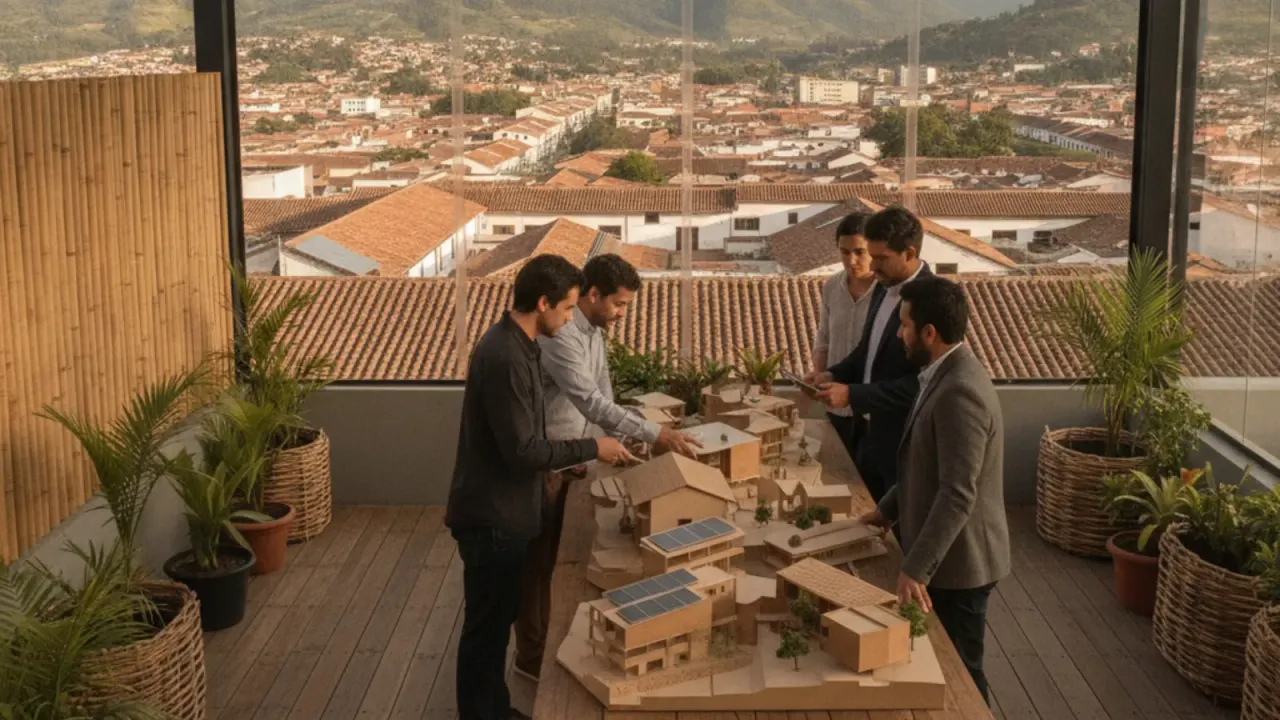
A Cuenca architecture studio is making a bigger argument than "build something pretty and add plants later."
Estromas, a local studio led by architects Dario Pintado, Natalia Juca, and Matias Avila, is working with what it calls regenerative architecture: buildings and spaces designed to fit into natural systems instead of simply sitting on top of them.
Their projects include Santuario de Testudines, Simbiosis, Kanoa, Wings and Roots, and Caudales. The shared idea is that a building can become a refuge for plants, animals, and microorganisms, not just a place for people.
The practical idea
One of the studio's guiding principles is simple: the form follows biological processes.
That means looking first at the site itself: climate, vegetation, water, biodiversity, and the relationships between species. The design tools can be modern - digital modeling, climate analysis, scientific research, and artificial intelligence applied to design - but the starting point is still the land.
Natalia Juca summed up the approach this way: nature is the teacher, and technology is the bridge.
Why this is interesting in Cuenca
Cuenca is growing, filling in, and getting denser. That usually means more concrete, more roof surfaces, more pressure on old neighborhoods, and less space for small ecosystems.
Estromas is taking the opposite question seriously: what if urban design made more room for life?
With Wings and Roots, the studio proposes turning terraces and rooftops into biological corridors that can recover biodiversity inside Cuenca. The project is meant to create spaces for birds, amphibians, insects, and native plants.
With Caudales, developed on the urban-rural edge of San Joaquin, the focus expands to agriculture, identity, and landscape. The proposal brings together gardens, ecological corridors, habitats for amphibians and insects, and systems connected to the agricultural character of the area.
Not just green decoration
The important distinction here is that the work is not just decorative landscaping. Estromas is looking at water capture, natural ventilation, local materials, existing vegetation, and the relationship with surrounding communities.
For expats watching Cuenca change, this is a useful lens. The city can modernize in ways that erase what makes it livable, or it can modernize in ways that protect more of the environment that makes daily life here feel different.
That is the part worth paying attention to.
Keep Cuenca's daily expat briefing independent.
Reader support helps pay for reporting, translation, editing, hosting, and the daily work behind CuencaExpat.