Ecuador's National Assembly Just Held a Rare Session in Cuenca — Here's What They Debated

Why Is This a Big Deal?
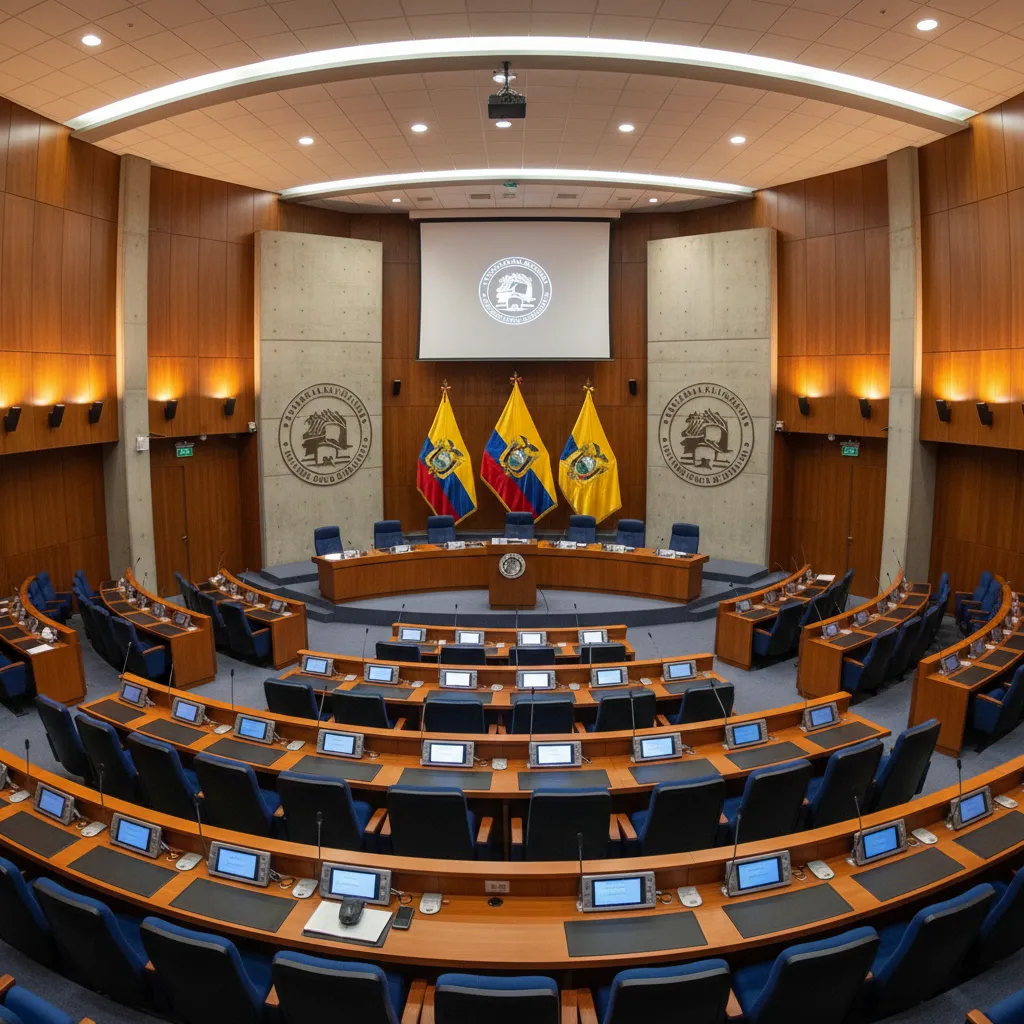
Ecuador's National Assembly (the country's legislature) almost always meets in Quito. Holding a plenary session outside the capital is rare — and symbolically significant. On March 17-18, the full Assembly convened at the Universidad Católica de Cuenca's postgraduate campus in the Uncovía sector.
This isn't a ceremonial visit. They came to vote on real legislation.
What They Debated
Session 78 — Monday, March 17
The Assembly approved the Organic Reformatory Law for the Strengthening of the Penitentiary System with 84 votes in favor out of 148 legislators present. This law overhauls prison management in Ecuador — a country that has seen devastating prison riots and violence in recent years.
They also reviewed a non-binding report on the closure of the CREA Savings and Credit Cooperative — a local institution whose collapse affected many Cuencanos.
Session 79 — Tuesday, March 18
The Assembly took up the first debate on a tax reform bill designed to incentivize social housing construction and reduce Ecuador's housing deficit. The government classified this as "urgent in economic matters," meaning it gets fast-tracked through the legislative process.
In a notable local angle, Azuay legislators Anthony Becerra and Adrián Castro pushed to include protections for municipal sanitation workers — the "hormiguitas" (little ants) who keep Cuenca's streets clean — against outsourcing.
What's in the Social Housing Law?
The bill aims to reduce Ecuador's housing deficit through tax incentives for developers and buyers of social-interest housing. While specific mechanisms weren't fully detailed in the first debate, the general framework includes:
- Tax breaks for construction companies building affordable housing units
- Reduced tax burden on buyers of qualifying homes
- Streamlined permitting for social housing projects
Ecuador has a significant housing deficit, and this law attempts to use the tax code to stimulate private-sector construction of affordable units.
Why Expats Should Care
Real estate impact: Tax incentives for housing construction could increase the supply of new homes in Cuenca. More supply generally means more options and competitive pricing — even in market segments above "social housing."
Political signal: The Assembly choosing Cuenca as a session location reflects the city's growing political importance. Cuenca is Ecuador's third-largest city, and its economic weight is increasing.
The CREA cooperative review is directly relevant to anyone who had deposits there or knows someone who did. The cooperative's closure in 2024 was a significant local financial event.
The Bigger Picture
It's worth noting that this Assembly session in Cuenca happened during the same week as the Mayor Zamora raid. Cuenca is very much in the national political spotlight right now — for better and worse.
Source: El Mercurio
Keep Cuenca's daily expat briefing independent.
Reader support helps pay for reporting, translation, editing, hosting, and the daily work behind CuencaExpat.