Barabon's Basket Makers Are Keeping a Yanuncay-Side Tradition Alive

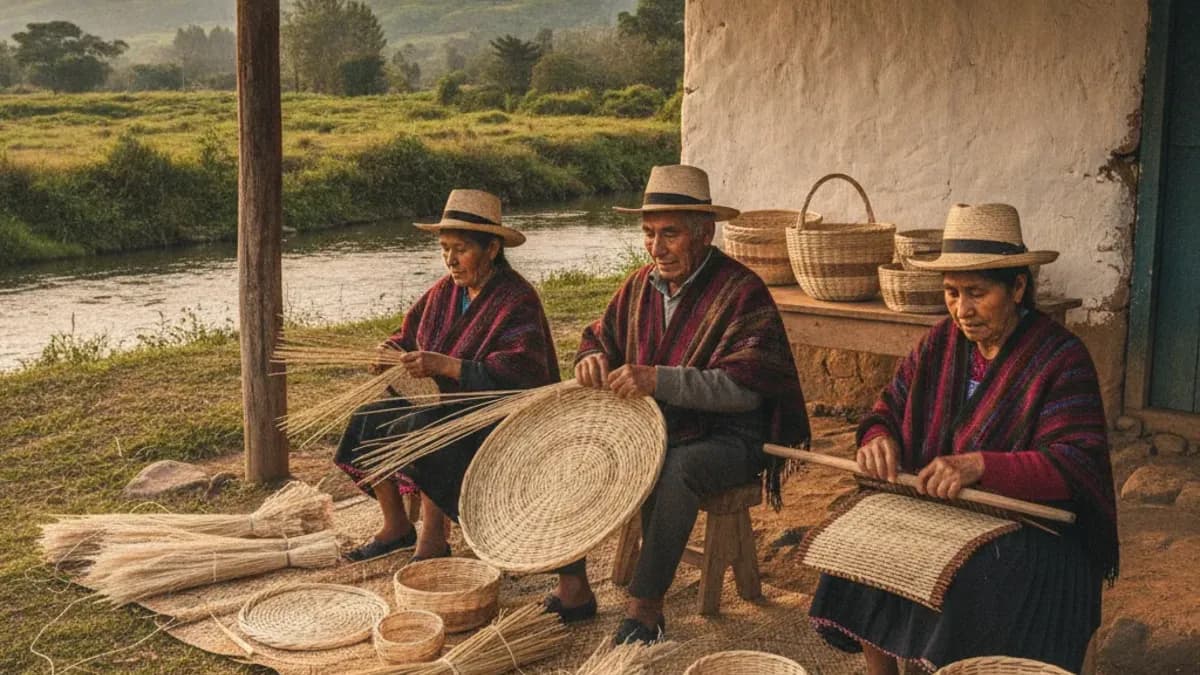
A few minutes west of central Cuenca, beside the Yanuncay River, an old craft is still alive in Barabon.
There, María Morocho and Manuel Nariguanga continue making baskets from suro fibers, using techniques passed down through generations.
María is 67 and Manuel is 75. She prepares the fibers; he shapes the basket structures. María began weaving when she was 12. Manuel learned by watching his parents and grandparents.
A Tradition Under Pressure
The work has become harder than it used to be. The material now comes mainly from Molleturo, and getting it is increasingly difficult because of restrictions on extracting suro plants, changes in land use, fewer natural areas and competition from plastic products.
Those pressures have reduced both production and the economic value of the work.
Migration is part of the story too. Many young people from Barabon have left for the city or gone abroad in search of better opportunities, leaving the craft mostly in the hands of older adults. Manuel says none of his four children continued the tradition.
The Effort to Keep It Visible
Nearby, Byron Tenesaca is trying to give the craft a future. Tenesaca is a visual artist and educator from the fifth generation of a weaving family. As a child, he accompanied his grandmother to sell baskets in Cuenca.
After living for about 18 years in the United States, where he studied art, history and education, he returned to Ecuador asking where the history of his community was being kept.
That question pushed him toward documenting and revaluing Barabon's basket-making tradition.
For Tenesaca, basket-making is not just practical work. It is living cultural heritage: ancestral knowledge, family memory, community identity and knowledge passed down orally.
Tradition, But Not Frozen in Time
The baskets have already reached fairs in the United States, where interest focuses not only on the objects but also on their history and origin.
Tenesaca and other artisans are also experimenting with contemporary basket designs, ecological backpacks, utilitarian art projects and new markets.
He is also working on a memory space for Barabon that would preserve old photographs, oral testimonies, historic baskets and artisan stories.
Why This Matters Locally
For expats, this is the kind of local story that explains Cuenca beyond the postcard version. Barabon is part of the same city fabric, and this craft sits at the intersection of migration, aging, local materials, family memory and the search for sustainable markets.
The urgency is real: many master weavers are now over 60 and 70.
For now, María and Manuel keep working, and another basket takes shape beside the Yanuncay.
Keep Cuenca's daily expat briefing independent.
Reader support helps pay for reporting, translation, editing, hosting, and the daily work behind CuencaExpat.