Ecuador's Country Risk Just Hit an 11-Year Low — What That Means for Your Money Here

The Number
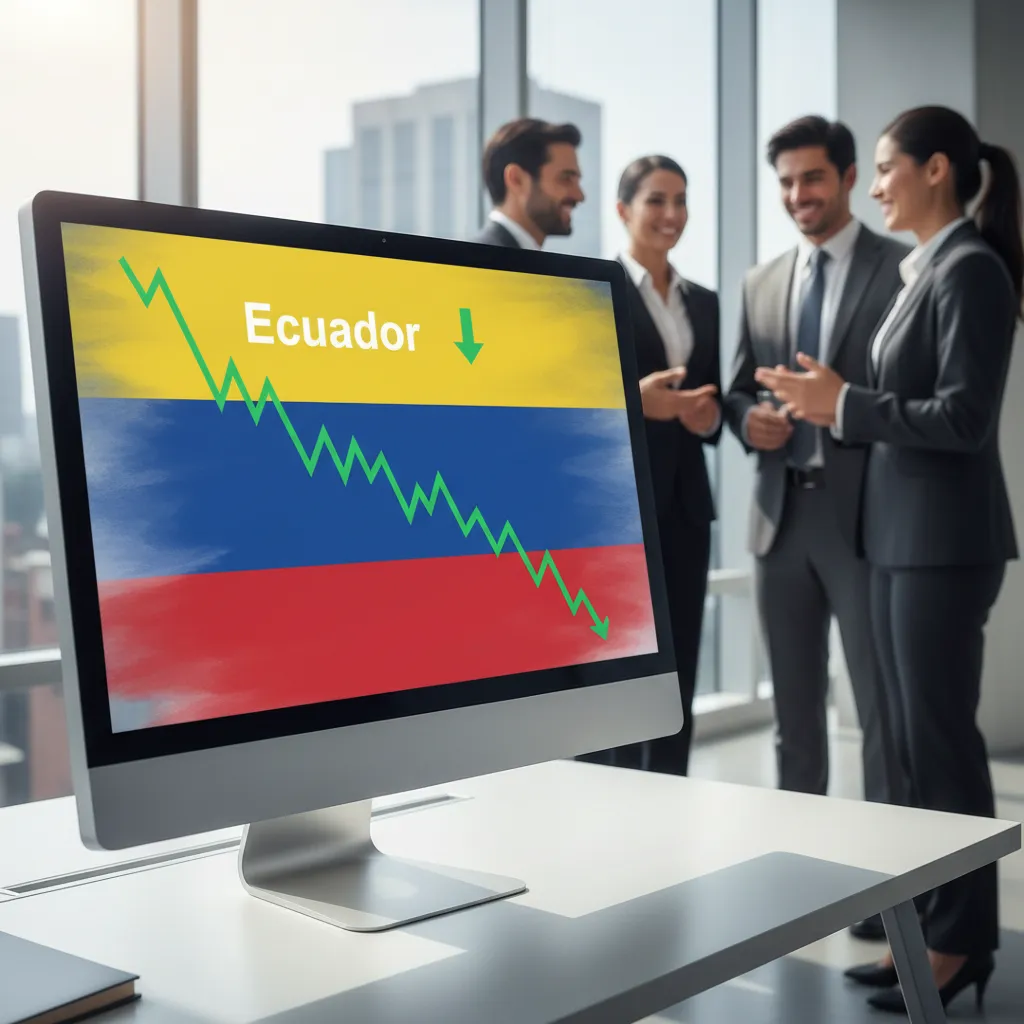
Ecuador's country risk index fell to 404 points as of April 22 — the lowest it's been in 11 years. For context, it peaked at 6,063 points on March 23, 2020, when the pandemic was hitting Guayaquil hardest.
The decline has been dramatic: from 1,186 points at the start of 2025 to 492 by year-end — a 694-point drop in a single year. In April 2026 alone, it fell another 83 points.
Finance Minister Sariha Moya: "The confidence of international investors towards Ecuador is reflected in constant country risk reduction."
What Is "Country Risk" Anyway?
Country risk (riesgo país) measures how much extra interest a country has to pay to borrow money on international markets compared to U.S. Treasury bonds. Lower = more trust from investors. Higher = "we're not sure you'll pay us back."
At 404 points, Ecuador is paying about 4% above the U.S. baseline — still not investment-grade territory, but a massive improvement from the dark days of 2020.
The Bigger Economic Picture
The country risk number doesn't exist in a vacuum. Here's what's behind it:
- GDP growth in 2025: 3.7% — beat multilateral forecasts
- Trade surplus: $6.227 billion
- Non-petroleum exports surplus: $5.032 billion — meaning Ecuador isn't just riding oil prices
- Inflation: 1.91% — among the lowest in the region (dollarization helps)
- International reserves: $9.795 billion (Dec 2025), up from $6.899 billion a year earlier — a 42% jump
- Adequate employment: up from 33% to 37%
- Extreme poverty: down from 28% to 21.4%
The IMF approved a $394 million disbursement this year, part of a roughly $5 billion program with about $3.7 billion already transferred in 2026.
What This Means for You
If you live in Ecuador — especially if you're dollarized, receiving income from abroad, or holding property here — this is broadly good news:
- The dollar stays. Lower country risk reduces the already-slim chance of dollarization being challenged. Investors and the IMF are betting on stability.
- Banking gets slightly better. Lower sovereign risk eventually translates to slightly better lending conditions for local banks.
- Property confidence. International credibility means more foreign investment, which supports property values — especially in cities like Cuenca that already attract international buyers.
- It's not paradise. Poverty dropped but is still 8.3%. Adequate employment is improving but only 37% of workers qualify. The IMF program comes with conditions that affect government spending.
The trajectory matters more than any single number. A year ago, Ecuador was at 1,186. Today it's at 404. That's the kind of arc that changes how the world looks at a country.
Source: El Universo
Keep Cuenca's daily expat briefing independent.
Reader support helps pay for reporting, translation, editing, hosting, and the daily work behind CuencaExpat.