Sayausi Turns Garcia Moreno Street Into A Living History Walk

Source: El Mercurio
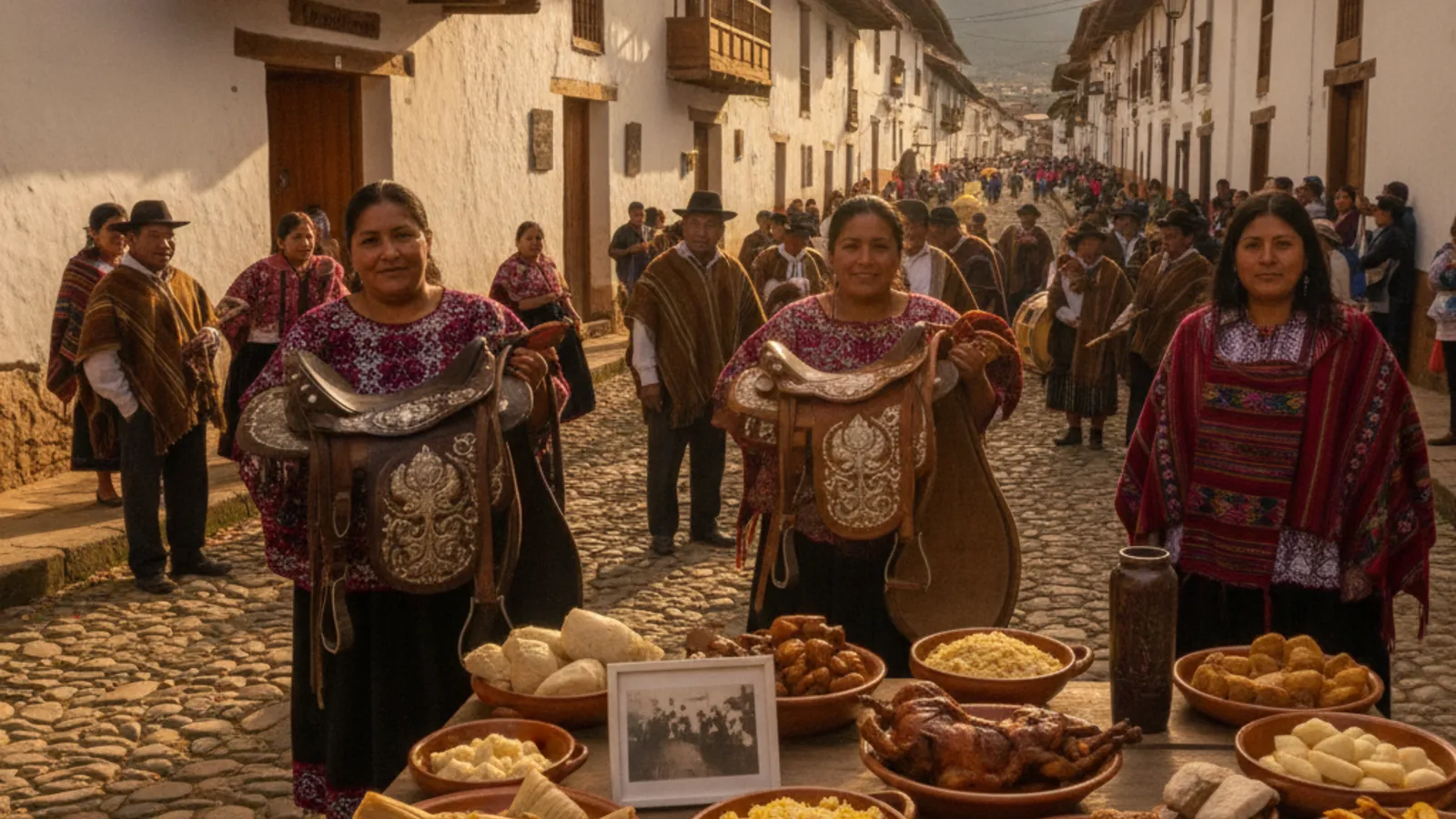
Sayausi used Garcia Moreno street as the first stage of Carbon Fest, turning the old route into a public display of parish memory.
Residents decorated the facades of their homes with inherited clothing, tools, and family objects. The displays included embroidered polleras, llicllas, hats, saddles, and old containers once used along the Sayausi-Molleturo route.
Why This One Is Sweet
Garcia Moreno is not just another street in the parish. Before the current connection roads, it was a horse trail and, for decades, the main access to the city.
The older story runs even deeper. The route carried arrieros between the Coast and the Sierra, and Sayausi's history goes back to the Canari era, when it functioned as an ayllu-cacicazgo and tambo within the Qhapaq Nan.
One resident summed up the mood simply: the house was decorated to rescue local values, culture, and traditions.
Food, Music, And A Very Large Cecina
After the patrimonial walk, the festival moved to the parking lot of Saya Hotel & Suites for the gastronomic and artistic program.
The headline dish was hard to miss: a 21-meter cecina made with about 300 kilograms of meat, served with yuca and sides while dance groups and invited artists performed.
Wilmer Sanchez, president of Carbon Fest, said the festival is meant to promote tourism, strengthen gastronomy, and generate income for parish entrepreneurs. The event ran Saturday, July 4 and Sunday, July 5, with support from the Municipality of Cuenca, the Prefecture of Azuay, private institutions, and gastronomy students from Instituto Sudamericano.
The bigger idea is to keep Garcia Moreno alive as a cultural and traditional street for future editions.
Keep Cuenca's daily expat briefing independent.
Reader support helps pay for reporting, translation, editing, hosting, and the daily work behind CuencaExpat.