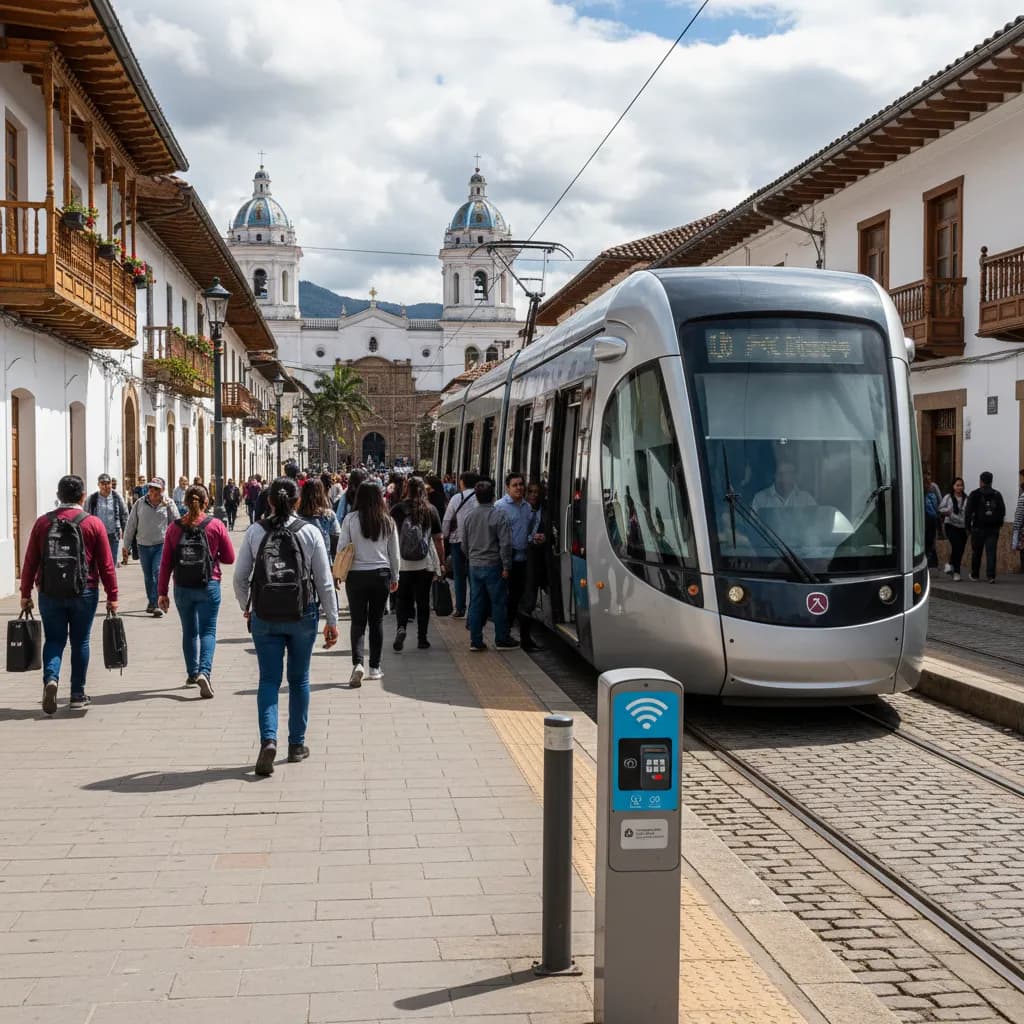
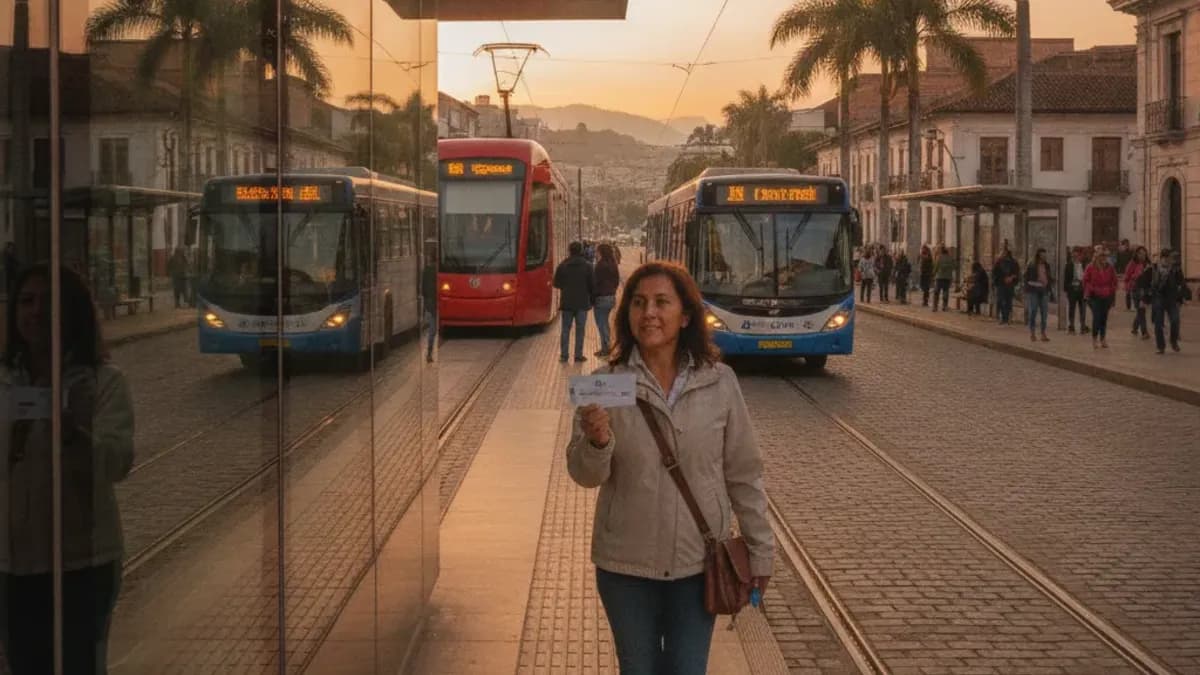
Cuenca’s tram and bus card: check what works today

A plan to make bus and tram cards interchangeable is different from a working payment system. Cuenca announced an integration agreement in December 2025, but the records checked for this page do not establish that you can use one card on both services today. Before a trip, confirm the accepted payment method with each operator.
What the city actually announced
On December 8, 2025, the Municipality of Cuenca announced a cooperation agreement with the Sistema Integrado de Recaudo (SIR) consortium. The stated aim was to make existing bus and tram cards interoperable. The same announcement said technical hardware and software still had to be contracted. A later phase envisioned a broader city card and other payment options. These were implementation plans, not confirmation that every reader could already switch between services with one card.
Why an old rollout date is unreliable
El Mercurio reported on June 8, 2026 that a procurement process for the interoperability system was suspended while Ecuador’s public procurement service reviewed material from the municipality. An August 31 transport-industry report also described that consultation as suspended. Those dated reports explain why a prediction of a mid-2026 launch should not be treated as a service notice. Neither report establishes the system’s status on every later day.
Do not confuse bus-card changes with integration
A separate July 31 municipal notice discussed personalizing the Movilízate card for a bus-fare subsidy beginning August 15. That notice concerns the bus card and subsidy; it is not an announcement that the card works on the tram. It also does not by itself establish whether a particular visitor qualifies for a fare preference.
Before riding
- Check the official Tranvía site for its current payment and service information.
- Check the municipality’s bus route information and ask the bus operator what payment it currently accepts.
- If you plan to transfer, ask both operators whether the same card is accepted now, whether a transfer requires a separate charge, and where to obtain or recharge the card.
Do not rely on the old article’s fare table, promised rollout date, or assumption that the integration is complete. Fares and eligibility can change; use the operators’ current instructions for your particular trip.
Sources
- Municipality of Cuenca, December 8, 2025 integration announcement
- El Mercurio, June 8, 2026 procurement report
- Revista Buen Viaje, August 31, 2026 status report
- Municipality of Cuenca, July 31, 2026 Movilízate notice
- Tranvía de Cuenca, current operator site
This article is AI-generated and may contain errors or omit context. Verify changing details using linked sources. If you spot an error, use the correction form below.
Keep Cuenca's daily expat briefing independent.
Reader support helps pay for reporting, translation, editing, hosting, and the daily work behind CuencaExpat.