A Cuenca School Shows What Inclusive Design Can Look Like

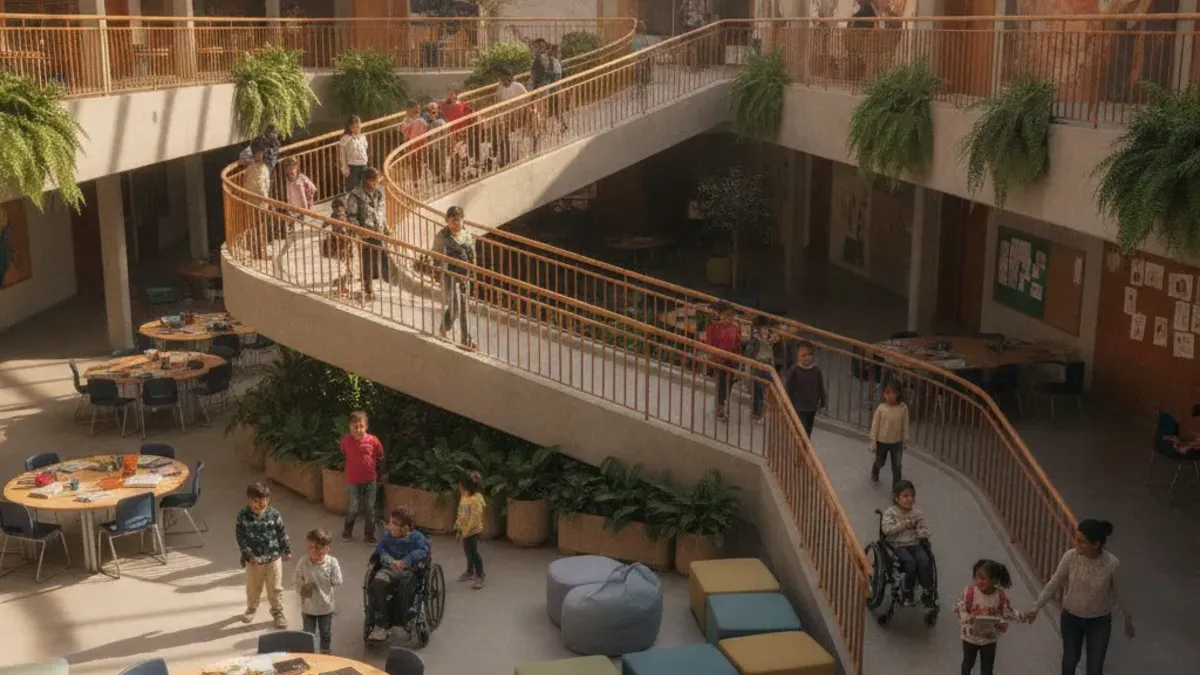
A Cuenca school near the Banco Central, on the edge of the Centro Historico, has turned a small urban building into a surprisingly ambitious inclusion project.
At Unidad Educativa Estrellita Creativa, traditional stairs were replaced by a ramp connecting three floors. Most classrooms do not have doors. Spaces are adapted for different uses, and the building is designed for children with and without disabilities.
The Design
The project was built about two years ago and designed by Cuenca architects from Ruptura Arquitectura.
The central ramp was inspired by the image of a hillside where children slide on cardboard. The first and third floors evoke public plazas, while the school bar references the small shops around Plaza de la Merced.
The open classrooms are meant to create a more collaborative learning environment across levels and subjects.
Why It Matters
The architects say the project is also an argument for keeping educational and social facilities inside the Centro Historico instead of pushing them out of the city center.
Their view is that small central buildings can still work if they are used vertically and creatively.
Teachers at the school say the open design supports concentration, trust, participation and supervision. Because there are fewer hidden spaces, staff can observe what is happening from different points in the building.
What This Means For Expats
This is not a tourist attraction or a service announcement. It is a useful look at where Cuenca can be quietly creative: small spaces, old-city constraints, and practical design that solves a real human problem.
For expat families, educators, architects, or anyone watching how Cuenca grows, it is also a reminder that development is not only about towers and malls. Sometimes the more interesting work is happening inside a small school near the center.
Keep Cuenca's daily expat briefing independent.
Reader support helps pay for reporting, translation, editing, hosting, and the daily work behind CuencaExpat.