Andean Bears Are Showing Up on the Gualaceo–Limón Highway — Here's What's Going On

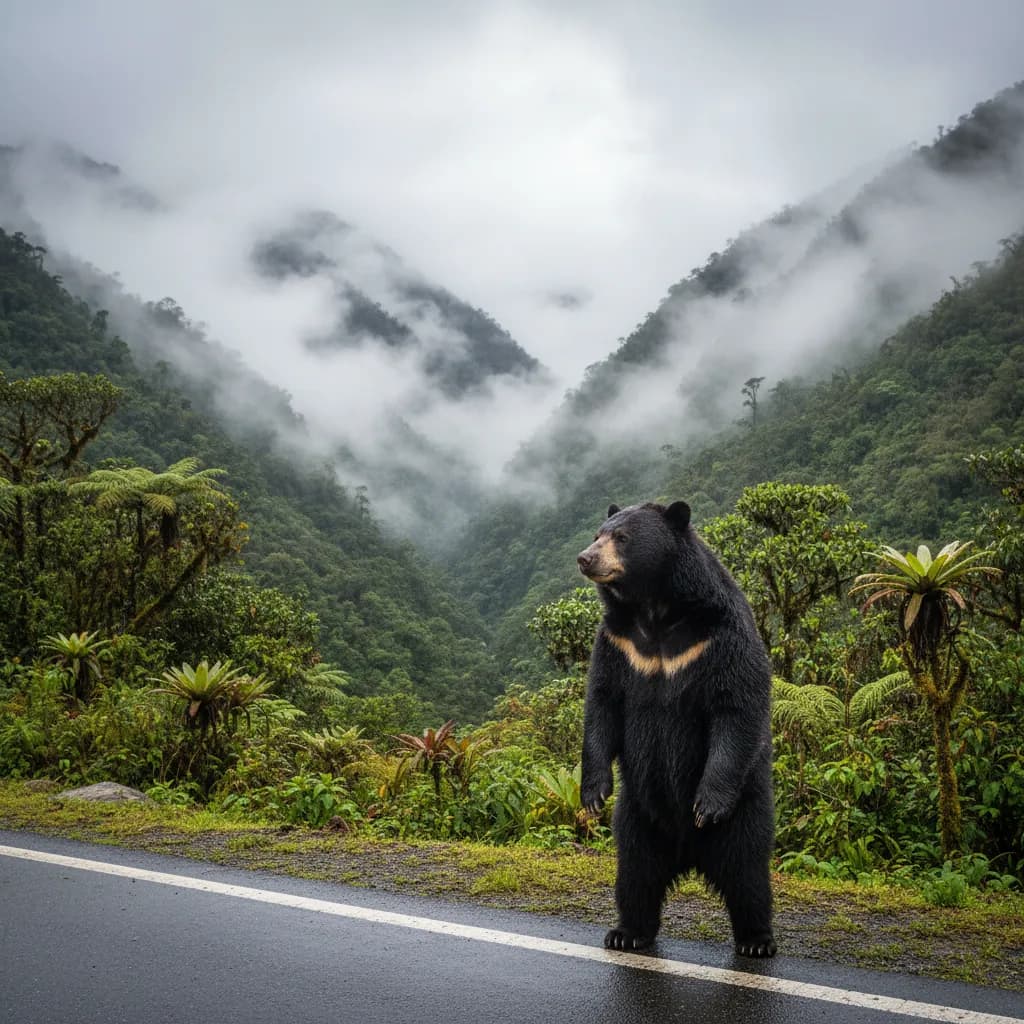
If you've been driving the Gualaceo–Plan de Milagro–Limón road lately, you might have caught a glimpse of something rare. Two separate Andean spectacled bears have been photographed and filmed along that 60-kilometer stretch in recent weeks — and biologists are watching closely.
The Sightings
The two encounters were captured by drivers Juan Carlos Cañizares and Dennis Segovia and shared on social media. The road connects Azuay province with Morona Santiago, climbing out of the highlands and dropping into Amazonian cloud forest — exactly the kind of habitat where the bears live.
Biologist Gabriel Merino examined both clips. The first bear, he said, is probably four or five years old: "podría tener unos cuatro o cinco años y su tamaño de rostro sugiere que se trata de un animal relativamente joven." The second was older, with a broad chest and strong forelimbs — likely between five and ten years old.
Why They're Coming Closer
Environmental engineer Karla Fajardo told El Mercurio that two things are pushing the bears toward roads and farms: hunger and habitat loss.
"Debido a la falta de alimento algunos han comenzado a atacar al ganado para alimentarse de su carne… Además, el ser humano invade cada vez más su hábitat, lo que los obliga a desplazarse," she explained — short on food, some bears have started preying on livestock, and as humans push deeper into their territory, the bears are forced to move.
The Conservation Picture
The Andean (or "spectacled") bear is the only bear species native to South America, and it's classified as endangered. The Gualaceo–Limón road threads through three protected zones:
- Collay Municipal Conservation Area
- Maylas Conservation Area
- Río Paute Watershed Protective Forest
That's prime bear country — and prime crossing territory.
If You're Driving That Route
- Slow down in foggy stretches and through protected-area signage — that's exactly where you'd see one cross.
- Don't stop to feed, follow, or get a close photo. A bear that learns to associate humans with food is a bear with a much shorter life expectancy.
- Report sightings to local environmental authorities so biologists can track movement patterns.
What to Watch
Biologists are calling for stepped-up monitoring along the corridor. If bear–livestock conflict keeps rising, expect more conversation about wildlife corridors and protected-area enforcement in the months ahead. For now: drive a little slower through Collay, and keep your phone handy — but at distance.
Source: El Mercurio
Keep Cuenca's daily expat briefing independent.
Reader support helps pay for reporting, translation, editing, hosting, and the daily work behind CuencaExpat.